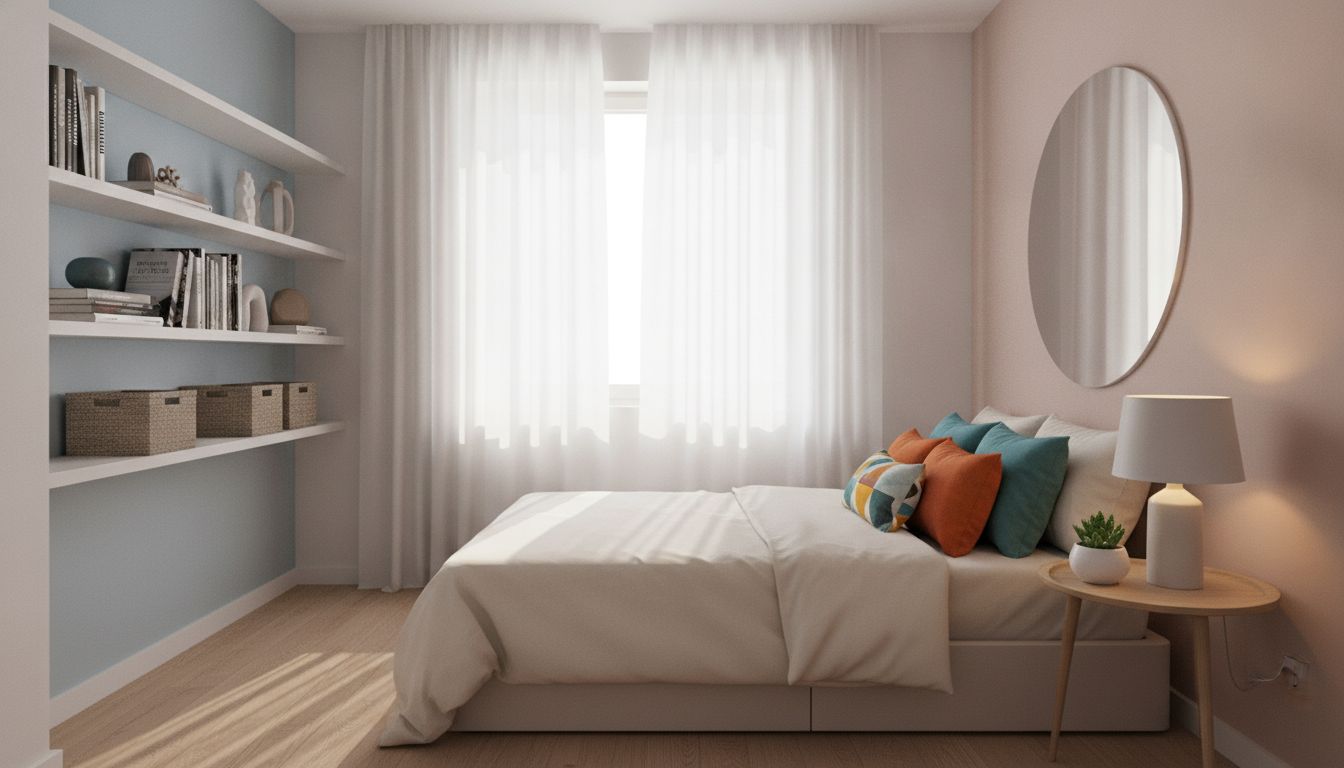

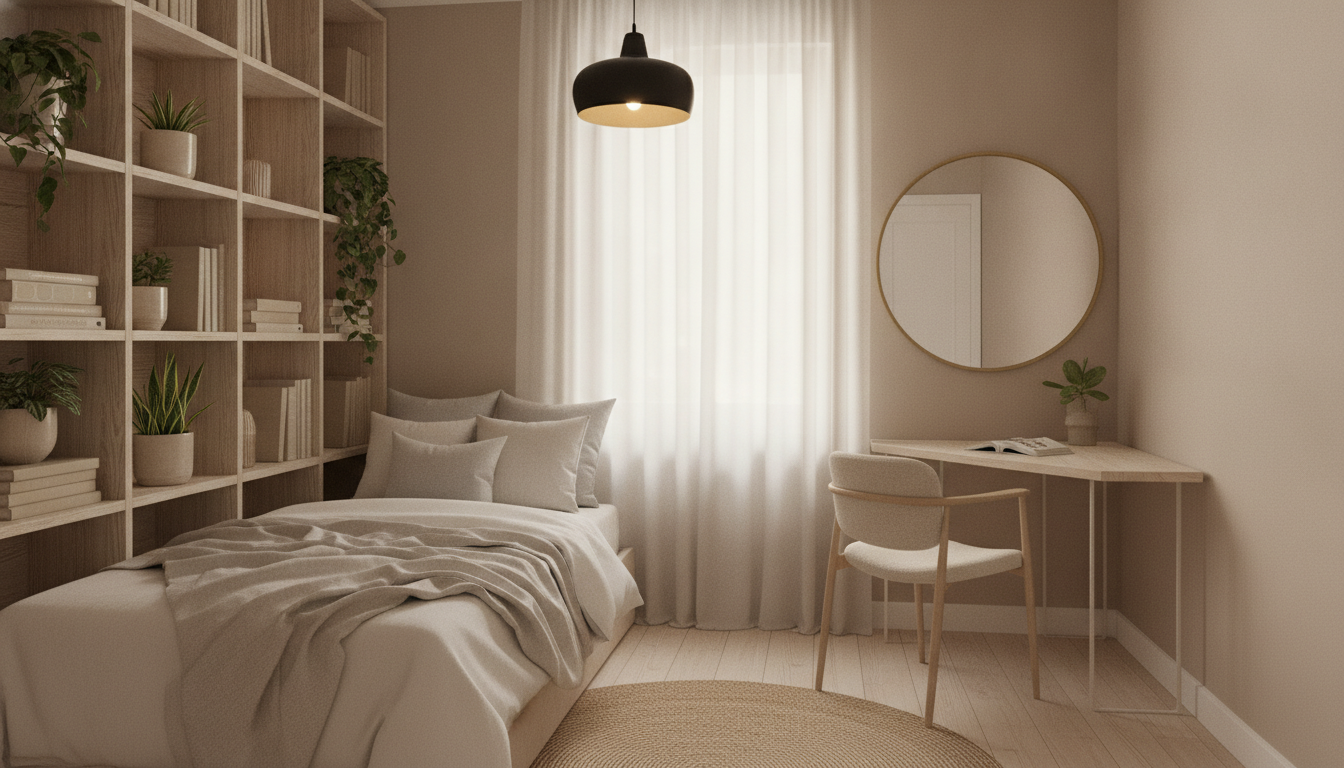
Have you ever wondered if your cramped sleeping quarters could actually feel like an expansive sanctuary? Many people assume that limited square footage dictates a cluttered lifestyle, but this is simply not true.
You can transform your environment by intentionally editing your furniture, lighting, and color choices. Choosing appropriately scaled pieces creates an immediate sense of openness. Furthermore, sticking to monochromatic palettes helps reduce visual stopping points, allowing your eyes to travel across surfaces without interruption.
This guide provides the practical steps you need to master your layout. We will explore how to measure your space, select functional storage, and use mirrors to enhance depth. By following these design a small bedroom ideas, you will learn how to turn your cozy nook into a breathable, stylish retreat that feels twice its actual size.
Set Your Small Bedroom Goals Before You Rearrange
You can turn a cramped room into a sanctuary by setting clear goals before you start rearranging. Taking the time to evaluate your space ensures that every piece of furniture serves a purpose. Following these small bedroom design tips will help you avoid common mistakes like blocking walkways or choosing items that overwhelm your floor plan.
Measure the Room, Doors, Windows, and Existing Fixtures
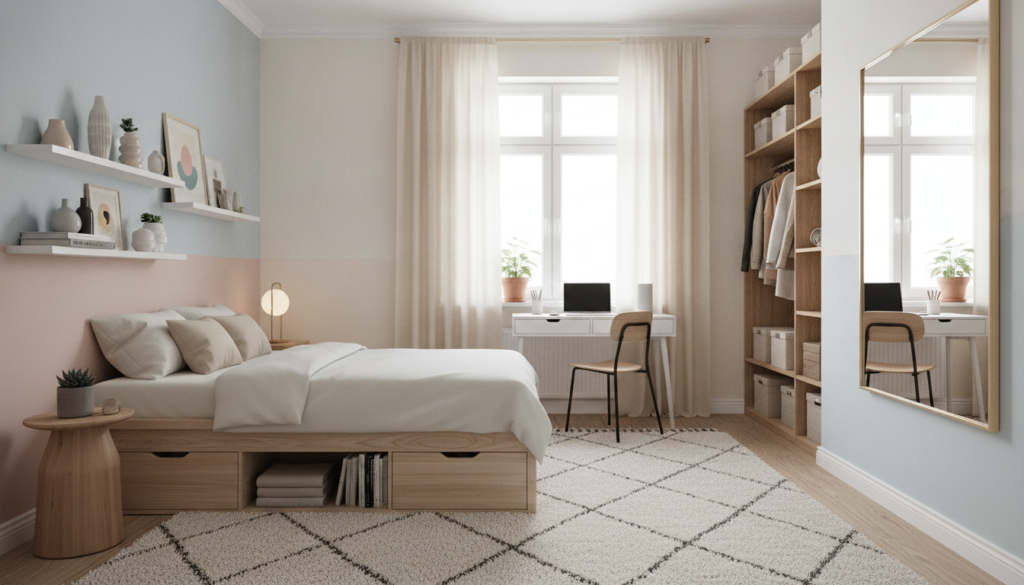
Before you move any heavy furniture, grab a tape measure and record the dimensions of your room. Note the exact placement of doors, windows, closets, and electrical outlets. You should also mark the location of permanent fixtures like radiators or baseboard heaters.
Having an accurate floor plan prevents the frustration of buying furniture that does not fit. It ensures that your doors can swing open fully and that your windows remain accessible. This foundational step is essential for creating a balanced and functional layout.
Identify the Bedroom’s Main Problems and Prioritize Them
Every small room has unique challenges that can hinder your comfort. Perhaps your closet is too small, or your bed placement makes the room feel like a hallway. List these issues and rank them based on how much they impact your daily routine.
Focusing on your biggest pain points first allows you to allocate your budget and energy effectively. Once you solve the primary layout issues, smaller aesthetic concerns often become easier to manage. Prioritizing your needs helps you stay disciplined during the design process.
Choose a Function-First Plan for Sleeping, Dressing, and Storage
A successful layout starts by defining the primary functions of your room. Determine how much space you need for sleeping, dressing, and storing your belongings. If you work from home, you might also need to carve out a small area for a desk.
Carefully considering furniture scale is one of the most reliable small bedroom design tips for maintaining visual balance. By keeping your goals in mind, you can select pieces that maximize utility without cluttering the room. Always prioritize flow and comfort to ensure your bedroom remains a relaxing retreat.
Design a Small Bedroom Ideas That Create a More Open Layout
An open layout is the secret to making even the smallest bedroom feel airy and inviting. When you prioritize flow, you transform a cramped space into a functional sanctuary. These design a small bedroom ideas focus on how your furniture interacts with the architecture of your home.
Position the Bed to Preserve a Clear Walking Path
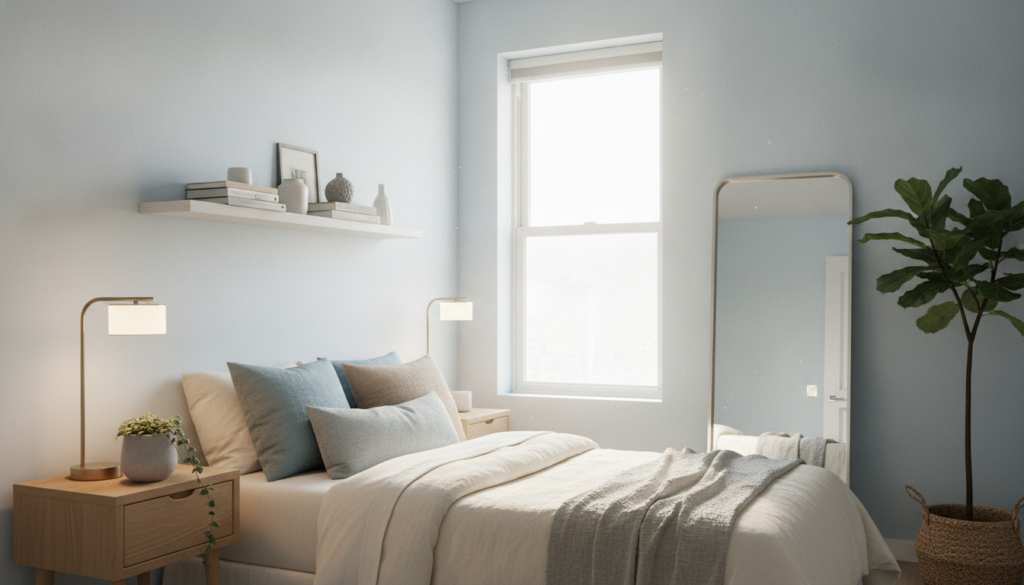
Your bed should serve as an architectural anchor rather than an isolated piece of furniture. Place it so that the path from your bedroom door to the closet and windows remains completely unobstructed. This simple adjustment ensures that your daily movement feels natural and effortless.
If you struggle with tight corners, consider pushing the bed against a wall to gain extra floor space. This technique keeps the center of the room open, which is essential for maintaining a sense of scale. A clear walking path prevents the room from feeling cluttered or difficult to navigate.
Use Small Bedroom Layout Ideas for Narrow, Square, and Shared Rooms
Every room shape requires a unique approach to maximize its potential. For narrow rooms, placing the bed along the long wall often creates the most efficient use of space. Square rooms benefit from centering the bed to create symmetry, which balances the visual weight of the furniture.
When dealing with shared bedrooms, use these small bedroom layout ideas to define individual zones without blocking the flow. You might use a low bookshelf or a rug to distinguish sleeping areas. Keeping the furniture profile low helps maintain an open, airy atmosphere in any shared environment.
Keep Visual Pathways Open From the Door to the Windows
Visual pathways are just as important as physical ones for making a room feel larger. When you look from the door toward the window, your eyes should travel without hitting bulky obstacles. This uninterrupted line of sight creates an illusion of depth that expands the perceived size of your bedroom.
Consider installing floor-to-ceiling curtains to draw the eye upward toward the ceiling. This vertical design move adds height and elegance while keeping the floor area clear. By maintaining these open sightlines, you ensure your space feels light, organized, and intentionally designed.
Choose a Bed Placement That Maximizes Usable Floor Space
Finding the perfect spot for your bed is the most effective way to maximize small bedroom space. Because the bed is usually the largest item in your room, its location dictates your circulation paths and overall comfort. By carefully selecting where to anchor your sleeping area, you can create a layout that feels intentional rather than crowded.
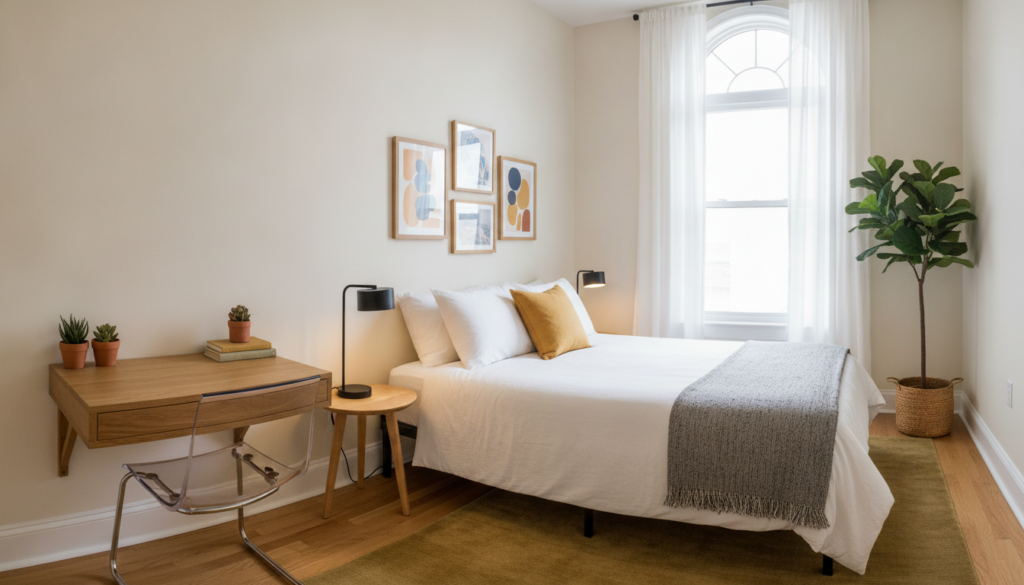
Center the Bed When You Need Balanced Nightstand Access
Centering your bed against the main wall provides a sense of symmetry that makes a room feel polished. This arrangement allows you to place matching nightstands on both sides, which is ideal if you share the room with a partner. It ensures that both people have equal access to storage and lighting without feeling cramped.
Place the Bed Against a Wall to Free Space in a Compact Room
If your room is particularly narrow, pushing the bed against a side wall is a smart move. This technique opens up a significant portion of the floor, giving you room for a desk, a dresser, or a clear path to the closet. You can soften this look by using low-profile furniture and a carefully sized rug to define the area without making the room feel heavy.
Use a Corner Bed Arrangement for Children’s and Guest Bedrooms
Corner arrangements are excellent for guest rooms or children’s spaces where floor area is at a premium. By tucking the bed into a corner, you leave the rest of the room open for play or work. In rooms with very high ceilings, consider a bunk bed or a lofted frame to move sleeping quarters upward, which helps you maximize small bedroom space while preserving valuable square footage for daily activities.
Select Space-Saving Bedroom Furniture That Fits Your Room
When you design a small bedroom, every piece of furniture must earn its place. Rather than simply buying the smallest items available, focus on the visual weight and footprint of each piece. These small bedroom furniture ideas help you maintain a sense of openness while keeping your essentials organized.
Replace Bulky Pieces With Narrow, Leggy, or Multifunctional Furniture
Heavy, solid-base furniture often makes a room feel smaller by blocking your view of the floor. Opt for pieces with tapered legs, which create an airy aesthetic by allowing light to pass underneath. These space-saving bedroom ideas rely on visual tricks to make your floor area appear larger than it actually is.
Consider multifunctional items like an ottoman with internal storage or a bench that doubles as a shoe rack. These pieces reduce the need for extra cabinets, keeping your walkways clear and your room clutter-free.
Choose a Storage Bed, Platform Bed, or Lift-Up Bed Frame
Your bed is the largest item in the room, so it should provide more than just a place to sleep. A platform bed with built-in drawers offers a perfect solution for storing seasonal clothing or extra linens. These small bedroom furniture ideas effectively turn your sleeping area into a hidden storage hub.
If you prefer a more minimalist look, a lift-up bed frame provides deep storage underneath the mattress. This design keeps your belongings out of sight while remaining easily accessible whenever you need them.
Use Wall-Mounted Nightstands and Folding Furniture Where Appropriate
Floor space is a precious commodity in a compact room. By installing wall-mounted nightstands, you free up the floor area around your bed, which makes the entire room feel more spacious. These floating surfaces provide just enough room for a lamp and a book without adding unnecessary bulk.
For those who need a workspace, consider a wall-mounted folding desk that tucks away when not in use. These space-saving bedroom ideas ensure that your room remains versatile and functional throughout the day.
Build Vertical Storage Without Making the Bedroom Feel Crowded
When floor space is limited, looking toward the ceiling is your best strategy for expansion. Many homeowners ignore the upper portions of their walls, leaving valuable square footage unused. By incorporating vertical bedroom storage, you can keep your floor clear while maintaining a clean, airy aesthetic.
Install Tall Shelving and Cabinets to Use Unclaimed Wall Space
Tall bedroom shelving units are excellent for drawing the eye upward, which creates the illusion of a higher ceiling. Opt for floor-to-ceiling cabinets with slab-front doors to minimize visual noise and keep your belongings tucked away. These streamlined pieces provide massive storage capacity without making the room feel cluttered or heavy.
When organizing these units, keep your most frequently used items at eye level for easy access. Place seasonal clothing or extra linens on the highest shelves where they remain out of the way. This simple habit keeps your daily routine efficient while maximizing every inch of your wall.
Organize Clothing With Double Hanging Rods and Slim Hangers
Effective small closet organization often starts with modifying the interior of your wardrobe. Installing double hanging rods allows you to stack two rows of clothing, effectively doubling your storage capacity. This is a perfect solution for shorter items like shirts, skirts, and folded trousers.
Pair these rods with slim, velvet-covered hangers to save even more space. These hangers take up significantly less room than traditional wooden or plastic versions. By reducing the bulk of your hangers, you can fit more garments into your closet without overcrowding the rack.
Use Over-the-Door Organizers for Shoes, Accessories, and Small Items
The back of your bedroom or closet door is a prime location for extra storage. Over-the-door organizers are ideal for keeping shoes, scarves, and jewelry neatly arranged and off the floor. These tools are essential for maintaining a tidy space in a compact room.
By utilizing these vertical surfaces, you free up precious drawer and shelf space for larger items. This approach ensures that every accessory has a dedicated home, which prevents clutter from accumulating on your surfaces. Consistent organization is the key to making a small bedroom feel functional and spacious.
Apply Small Bedroom Organization Hacks to Reduce Visual Clutter
Implementing effective small bedroom organization hacks is the secret to maintaining a tidy and functional sleeping space. When your room is limited in square footage, every item you own must serve a clear purpose. By clearing out unnecessary items, you create the breathing room needed for a peaceful environment.
Sort Your Belongings Before Adding New Storage Solutions
Before you purchase any new bins or shelves, you must conduct a thorough audit of your belongings. Sort your clothing, bedding, and personal items based on how often you actually use them. If an item has not been touched in months, it is likely taking up valuable space that could be better utilized.
This process prevents you from buying storage for things you do not need. Keep only the essentials that contribute to your daily comfort and routine. Once you have narrowed down your inventory, you will find it much easier to manage your remaining possessions.
Use Under-Bed Bins, Divided Drawers, and Labeled Containers
Once you have decluttered, utilize smart storage tools to keep your items in order. Under-bed bins are perfect for storing out-of-season clothing or extra linens without taking up floor space. Divided drawer inserts help you keep small accessories and socks neatly separated.
Using labeled containers is another one of the most effective small bedroom organization hacks. Labels provide a visual cue that helps you maintain order over time. When everything has a specific place, you are less likely to leave items scattered on surfaces.
Create a Dedicated Home for Electronics, Laundry, and Personal Items
Assign a permanent location for your electronics, such as charging cables and tablets. A small tray or a wall-mounted pocket can keep these items from cluttering your nightstand. Similarly, ensure your laundry hamper is tucked away in a corner or inside a closet to keep the floor clear.
By giving every personal item a dedicated home, you preserve a calmer atmosphere in your room. This intentional approach to storage ensures that your bedroom remains a relaxing sanctuary. Consistency is the final step in keeping your space feeling open and organized.
Use Light, Color, and Mirrors to Make the Room Feel Larger
You can easily expand the feel of your bedroom by mastering the interplay of color, light, and mirrors. These design elements work together to remove visual boundaries and create a sense of openness. By choosing the right finishes and fixtures, you transform a cramped space into an airy sanctuary.
Choose Light Wall Colors With Soft Contrast for an Airier Effect
Using light colors for small bedrooms is a classic strategy to make walls feel like they are receding. Soft whites, pale grays, or creamy beiges provide a clean backdrop that reflects natural light throughout the day. To keep the room from feeling sterile, introduce soft contrast through subtle textures rather than bold, dark patterns.
Consider using sheer cotton, voile, or muslin curtains to soften the incoming daylight. These fabrics allow a gentle glow to fill the room while maintaining a sense of privacy. For those moments when you need total darkness, install compact blackout roller blinds that tuck away neatly when not in use.
Layer Ceiling, Bedside, and Task Lighting Without Taking Floor Space
Effective illumination is crucial for a room that feels both functional and expansive. You should implement layered bedroom lighting to ensure every corner is bright without relying on bulky floor lamps. Start with a central ceiling fixture that provides ambient light, then add wall-mounted sconces on either side of the bed.
Sconces are excellent because they free up your nightstand surface for other essentials. If you enjoy reading in bed, consider adjustable task lighting that attaches directly to the headboard or wall. This approach keeps your floor clear and maintains a clean, uncluttered aesthetic.
Place Mirrors to Reflect Light and Extend the Sense of Depth
When you explore bedroom mirror ideas, focus on placement that maximizes the existing light. Position a large mirror opposite a window to bounce natural light deeper into the room. This simple trick instantly makes the space feel twice as large by creating the illusion of an extra window.
Be mindful of what your mirrors reflect to avoid creating distracting glare or clutter. Aim to have them face bright walls or decorative lamps rather than messy storage areas. A well-placed mirror acts as a window to more space, adding depth and elegance to your bedroom design.
Add Clever Small Bedroom Decor Without Sacrificing Space
Implementing clever small bedroom decor allows you to express your personality while keeping the space feeling open and airy. The secret lies in a restrained approach that adds character without filling every available surface. By focusing on quality over quantity, you can create a sanctuary that feels curated rather than crowded.
Use One Large Artwork or a Focused Gallery Arrangement
When choosing wall art, think big to make a bold statement. A single large piece of art acts as a focal point that draws the eye upward, creating an illusion of height. This approach prevents the visual fragmentation that often occurs when you hang too many small frames.
If you prefer a gallery wall, keep the arrangement tight and focused. Use matching frames to maintain a clean, cohesive look that does not overwhelm your limited wall space. This strategy keeps your room feeling organized and intentional.
Select Textiles That Add Comfort Without Adding Visual Weight
Your choice of bedding and fabrics significantly impacts the perceived size of your room. Opt for lightweight, breathable textiles in soft, neutral tones to maintain an airy atmosphere. Avoid heavy, dark patterns that can make a compact space feel smaller and more enclosed.
Limit the number of decorative pillows on your bed to prevent a cluttered appearance. A few well-placed, textured cushions can provide necessary comfort without taking over the entire sleeping area. This balance ensures your bed remains a cozy retreat rather than a storage zone for excess fabric.
Decorate With Floating Shelves, Sconces, and Small Plants
Utilize your vertical space to keep your floor clear and functional. Floating shelves provide a perfect spot for books or small keepsakes without the bulk of traditional bookcases. These shelves draw the eye toward the ceiling, which helps the room feel more expansive.
Wall-mounted sconces are an excellent alternative to table lamps, as they free up valuable surface area on your nightstands. By directing light upward or toward specific zones, you create depth and warmth. Finally, incorporate a few small plants to add life and natural color, which helps soften the edges of your furniture and adds a refreshing, organic touch to your design.
Create a Stylish Small Bedroom Design That Feels Personal
Creating a cohesive look in a compact space is the secret to a stylish small bedroom design. When you establish a clear vision early on, you prevent the room from becoming cluttered with mismatched items. A focused approach ensures that every piece you add serves both a functional and aesthetic purpose.
Define a Simple Design Style Before Buying Furniture or Accessories
Before you head to the store, decide on a specific design direction. Whether you prefer modern minimalism or a cozy bohemian vibe, sticking to one theme keeps the room feeling intentional. This strategy stops you from making impulse purchases that might clash with your existing layout.
Tonal interiors often work best in tight quarters because they soften the boundaries of the walls. By keeping your color palette controlled, you create an illusion of more space. You can still add personality through selective patterns that do not overwhelm the eye.
Balance Practical Storage With Warm Materials and Texture
You do not need extra furniture to make a room feel inviting. Instead, focus on incorporating warm materials like wood, wool, or linen to add depth. These textures provide comfort and visual interest without taking up valuable floor space.
Layering soft textiles creates a cozy atmosphere that feels curated rather than crowded. Think of plush rugs, woven throws, or velvet pillows to elevate the room. These elements transform a basic storage-heavy room into a stylish small bedroom design that feels like a true retreat.
Use a Consistent Finish Palette for Furniture, Hardware, and Lighting
Consistency is the key to making a room read as one continuous composition. Try to match your furniture finishes, such as light oak or matte black, across all your pieces. When your hardware, lighting fixtures, and bed frame share a similar tone, the room feels unified and polished.
This attention to detail prevents visual fragmentation, which is common in smaller areas. By harmonizing your finishes, you allow the eye to move smoothly across the space. This final touch ensures your stylish small bedroom design remains elegant and serene.
Complete Your Room Plan and Avoid Common Small-Space Mistakes
Successful small bedroom planning relies on testing your ideas before the heavy lifting begins. By taking a few extra steps now, you can avoid common small bedroom mistakes that often lead to cramped or frustrating living environments. A thoughtful approach ensures your final design remains both stylish and highly functional.
Test the Layout With Painter’s Tape Before Moving Heavy Furniture
Before you commit to moving heavy furniture, use painter’s tape to outline the footprint of each piece on your floor. This simple trick allows you to visualize the bed, dresser, and shelving units in real-time. You can also mark out your walking zones to ensure you have enough room to move comfortably without bumping into corners.
Measure Every New Piece Against the Available Floor and Wall Space
Always compare the dimensions of new items against your available floor and wall space. Check the swing of your bedroom door and closet doors to ensure they do not hit your new furniture. Verify that your chosen pieces do not interfere with window access or cover essential wall vents, as these oversights can ruin the flow of your room.
Remove Items That Block Light, Pathways, Closets, or Windows
Take a critical look at your current setup and remove any items that obstruct natural light or create narrow, awkward pathways. If a piece of furniture blocks your closet access or makes the room feel dark, it is time to relocate or replace it. Keeping these areas clear is a vital part of your bedroom space planning checklist.
To finalize your design, ensure that your room remains visually balanced and easy to navigate. A well-planned space should feel open, organized, and tailored to your personal needs. By following these final checks, you create a peaceful sanctuary that maximizes every square inch of your home.
Conclusion
Creating a larger feel in your bedroom relies on intentional editing rather than removing every personal item you love. You gain space by choosing pieces that serve a clear purpose while maintaining a balance between comfort and function.
A successful design relies on a clear layout, appropriately scaled furniture, and vertical storage solutions. You reduce visual clutter by keeping surfaces clean and using light colors to brighten the room. Layered lighting and strategically placed mirrors from brands like West Elm or Pottery Barn add depth to your walls.
Test your layout changes gradually to ensure each adjustment improves your daily circulation. You will find that small rooms feel stylish and open when every element works in harmony. Your bedroom becomes a peaceful sanctuary when you prioritize smart design choices over excess belongings.