
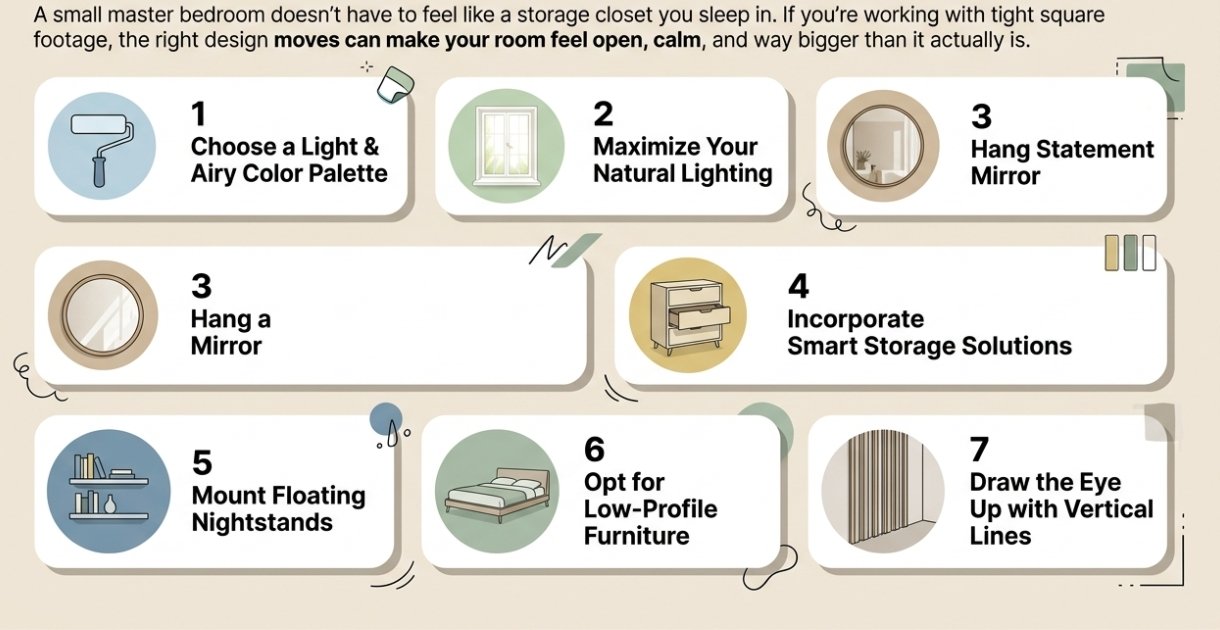
A small master bedroom doesn’t have to feel like a storage closet you sleep in. If you’re working with tight square footage, the right design moves can make your room feel open, calm, and way bigger than it actually is.
This guide is for homeowners, renters, and anyone redesigning a compact bedroom who wants real, actionable small master bedroom ideas not just generic advice that doesn’t translate to real life.
Here’s what we’ll get into: how the colors on your walls can visually push them apart, why your bed size and placement matter more than you’d think, and how mirrors and natural light can completely change how a room feels. We’ll also cover smart storage tricks that keep clutter off your floor and furniture choices that stop the room from feeling crowded.
No major renovation required. Just smarter decisions with what you already have.
Use Light Colors to Make Walls Feel Farther Apart
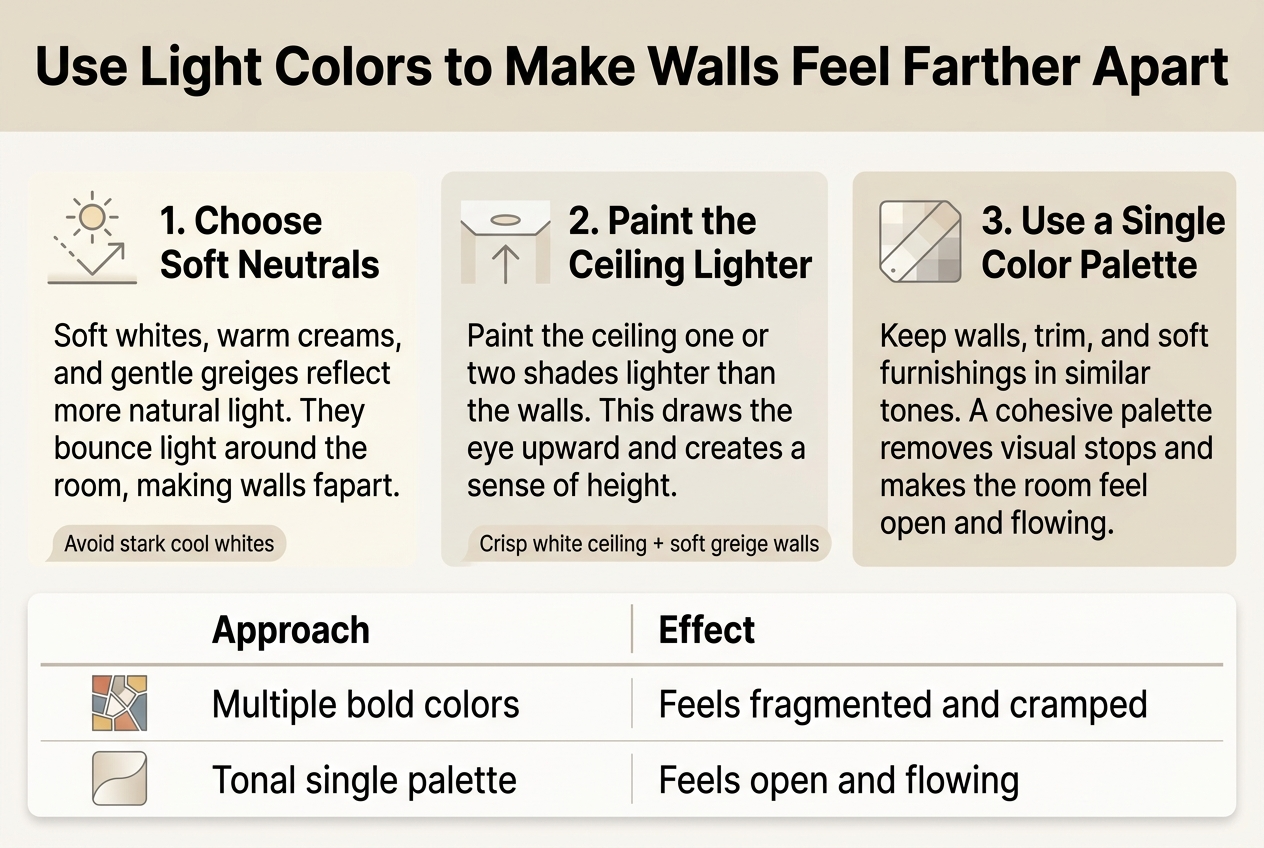
Choose Soft Neutrals to Reflect More Natural Light
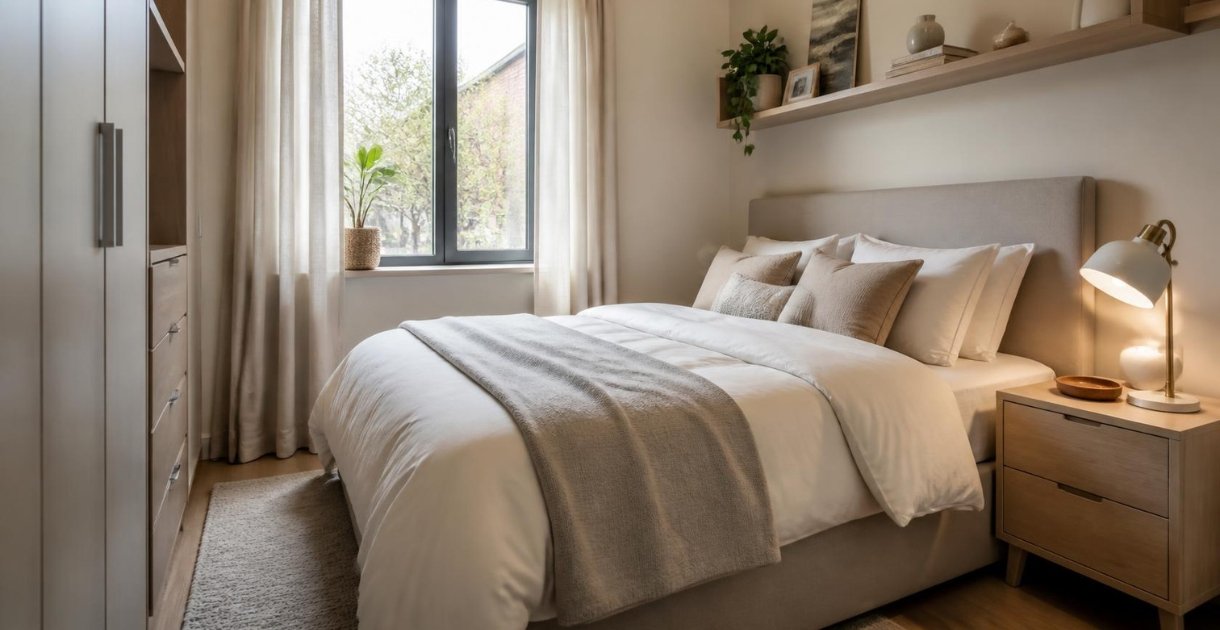
Soft whites, warm creams, and gentle greiges are your best friends in a small bedroom. These shades bounce light around the room instead of absorbing it, making walls feel like they’re stepping back rather than closing in. Avoid stark, cool whites they can feel clinical. Warm-toned neutrals create a cozy, airy feel at the same time.
Paint the Ceiling a Lighter Shade Than the Walls
Most people ignore the ceiling, but it’s actually prime real estate. Painting it one or two shades lighter than your walls draws the eye upward and creates a sense of height. A crisp white ceiling against soft greige walls can make even a low-ceilinged room feel noticeably taller.
Use a Single Color Palette to Create a Seamless Look
Chopping the room into multiple colors creates visual “stops” that make the space feel choppy and smaller. Sticking to one cohesive palette walls, trim, and soft furnishings in similar tones — removes those interruptions. The eye travels smoothly around the room, which reads as spacious.
| Approach | Effect |
|---|---|
| Multiple bold colors | Feels fragmented and cramped |
| Tonal single palette | Feels open and flowing |
Choose the Right Bed Size and Placement
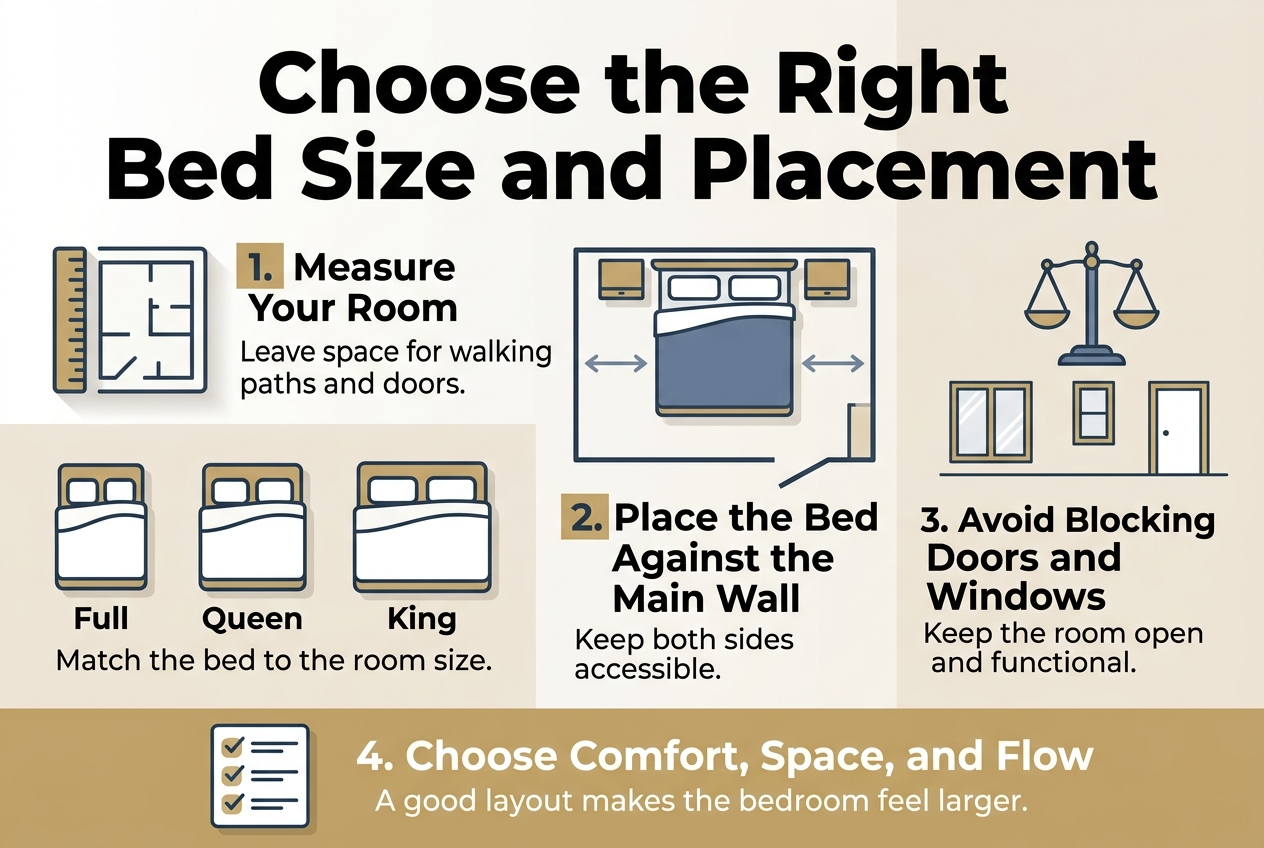
Opt for a Smaller Bed Frame to Free Up Floor Space
A queen bed in a small room often works better than a king. That extra breathing room around the frame makes the entire space feel less cramped. If you’re sleeping solo or with a partner who doesn’t sprawl, a full or queen is plenty.
Position the Bed Against the Longest Wall for Better Flow
Pushing the bed against the longest wall opens up a clear path through the room. This keeps traffic flow natural and gives you the most usable floor space on the remaining sides.
Use a Floating Bed Frame to Expose More Floor Area
Wall-mounted or platform frames with legs create visual breathing room by revealing the floor beneath. Your eye travels under the bed instead of stopping at a solid base, which instantly makes the room feel bigger.
Select a Low-Profile Headboard to Keep the Room Feeling Open
Tall, dramatic headboards eat into your vertical space and can make ceilings feel lower. A slim, low headboard or no headboard at all keeps the sightlines clean and the room feeling airy.
| Headboard Style | Visual Effect |
|---|---|
| Tall upholstered | Cozy but heavy |
| Low-profile panel | Light and open |
| Floating shelf | Minimal and modern |
Maximize Vertical Space With Smart Storage
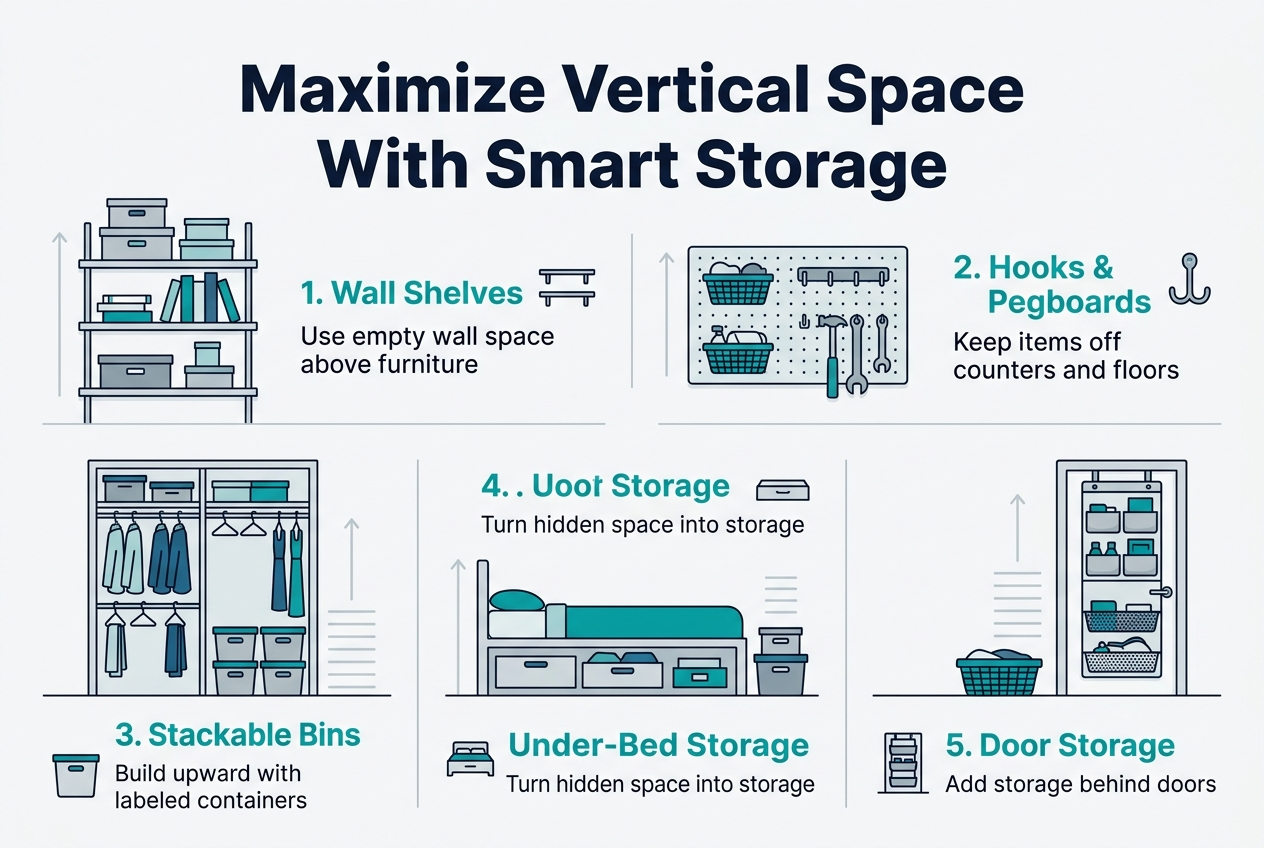
Install Floor-to-Ceiling Shelving to Draw the Eye Upward
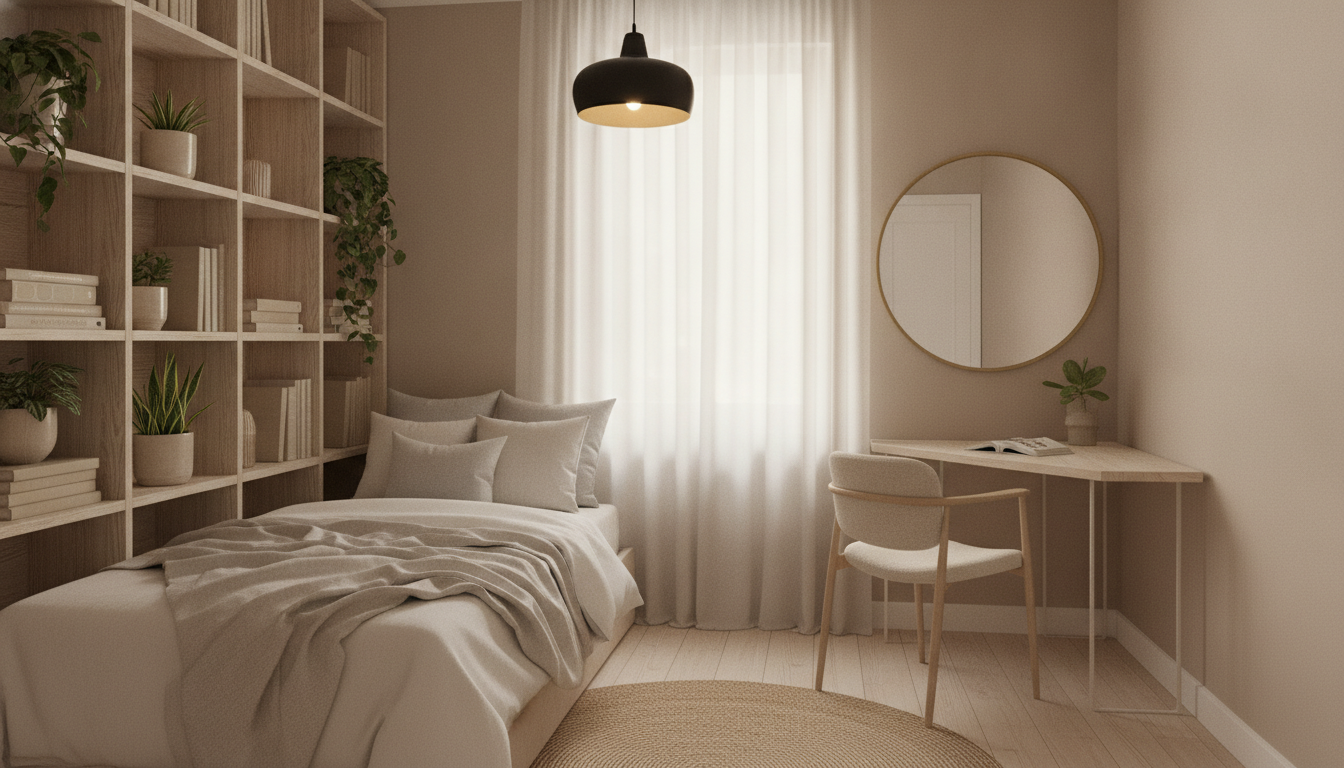
Tall shelving pulls your gaze up, making ceilings feel higher than they actually are. Built-in or freestanding units that reach the ceiling create storage without eating into your floor space. Keep upper shelves for decorative items or rarely used boxes, and lower shelves for everyday essentials.
Quick tips:
- Paint shelving the same color as the wall to blend seamlessly
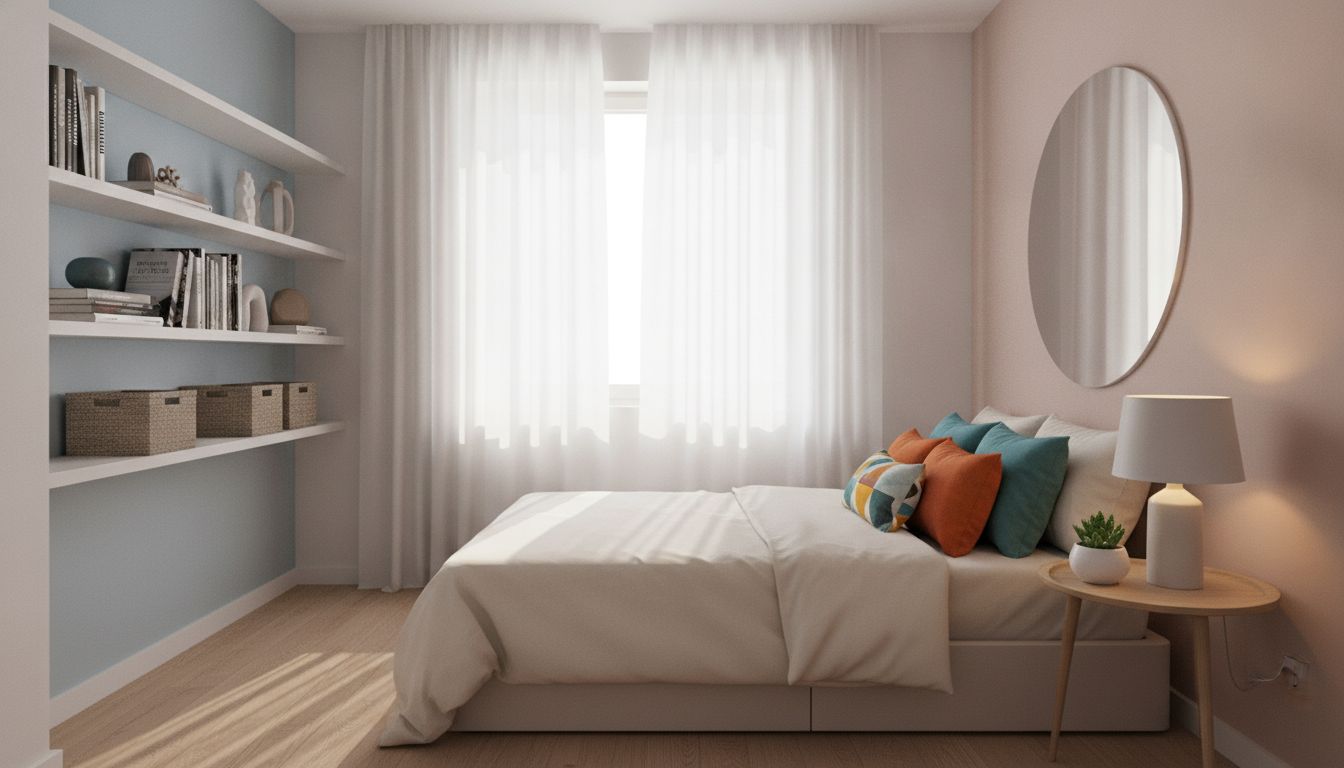
- Use matching baskets or bins to keep things visually tidy
- Mix books with small plants or decor to avoid a cold, utilitarian look
Use Wall-Mounted Nightstands Instead of Bulky Furniture
Traditional nightstands take up precious floor space and make the room feel cramped. Floating wall-mounted shelves or brackets give you the same function a spot for your lamp, phone, and water glass while keeping the floor clear and open.
Add Storage Ottomans to Keep Clutter Out of Sight
A storage ottoman at the foot of your bed works triple duty: extra seating, a footrest, and hidden storage for blankets, pillows, or off-season items. Choose a low-profile design in a neutral fabric so it blends rather than competes with the rest of the room.
Bring In Mirrors to Instantly Expand the Room
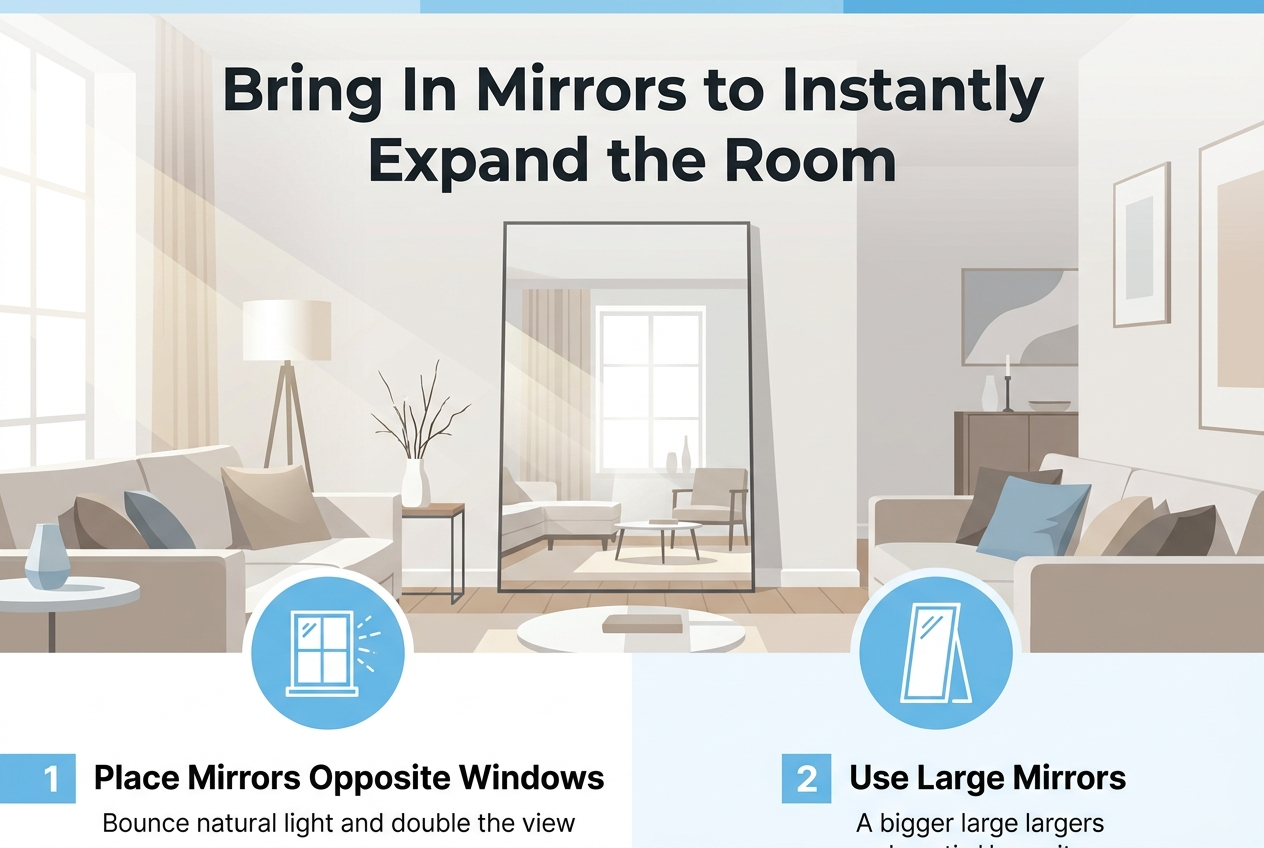
Place a Large Mirror Opposite a Window to Bounce Light
A well-placed mirror is one of the easiest tricks for making a small bedroom feel twice its size. Hang a large mirror directly across from your main window, and watch it pull natural light deep into the room. The reflection creates the illusion of a second window, making the space feel brighter and more open without touching a single wall.
- Choose floor-to-ceiling or oversized mirrors for maximum impact
- Lean a large mirror against the wall for a casual, layered look
- Avoid placing mirrors where they reflect cluttered corners aim for open space or greenery instead
Use Mirrored Furniture to Add Depth Without Bulk
Mirrored furniture does double duty it provides storage while visually disappearing into the room. A mirrored dresser or nightstand reflects its surroundings, giving the impression of depth that solid furniture simply can’t match.
| Furniture Piece | Why It Works |
|---|---|
| Mirrored dresser | Replaces heavy wood bulk with reflective depth |
| Mirrored nightstands | Keep surfaces light on both sides of the bed |
| Mirrored wardrobe doors | Turn a large piece into a room-expanding feature |
Keep the rest of your furniture simple so the mirrors stay the focal point.
Let in More Natural Light to Open Up the Space
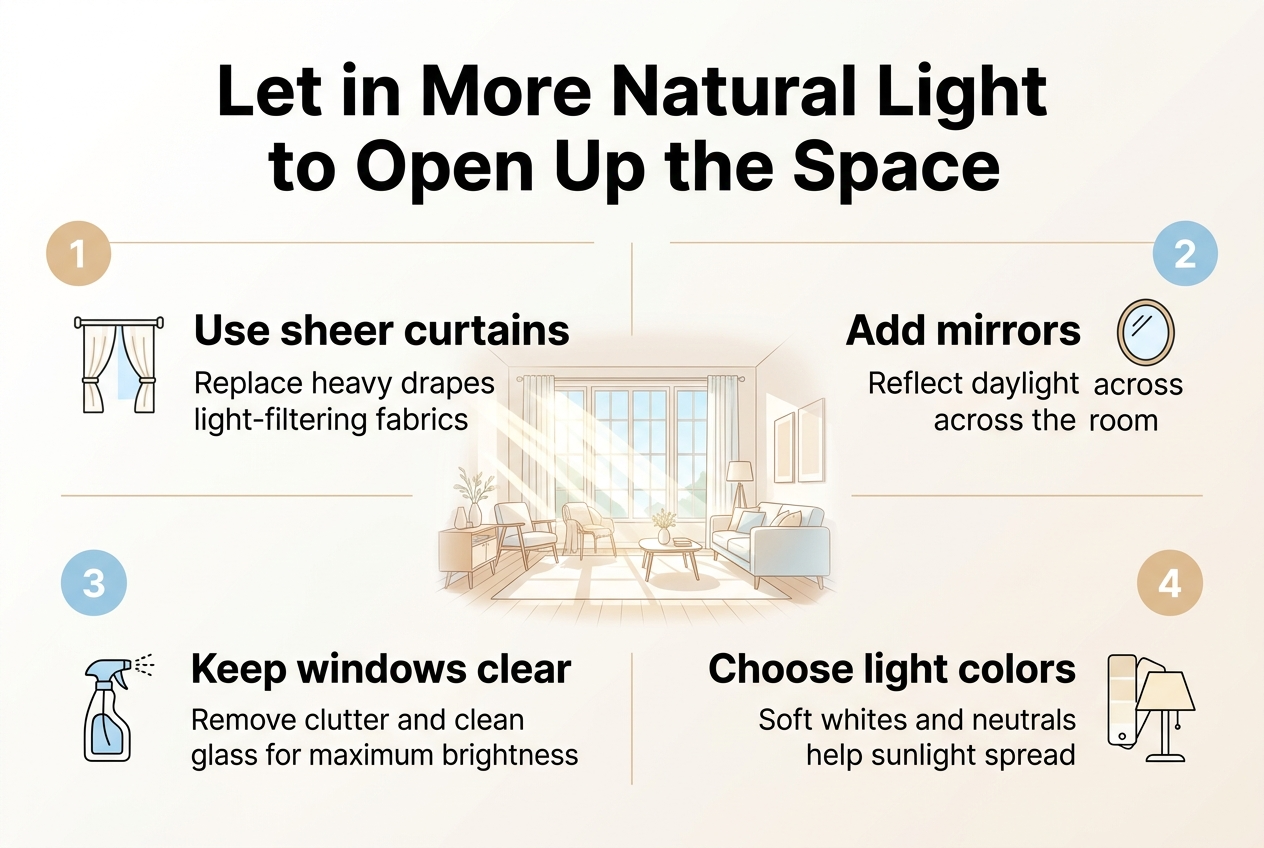
Swap Heavy Curtains for Sheer Panels to Brighten the Room
Thick drapes eat up light and make walls feel closer. Switching to sheer linen or voile panels keeps privacy intact while letting sunlight pour through all day. Stick to white or soft ivory for the biggest impact.
Keep Window Areas Clear of Furniture for Maximum Light Flow
Placing a dresser or headboard near a window blocks the light before it even reaches the room. Keep a clear path from the window inward even 18–24 inches makes a noticeable difference in how bright and open the space feels.
Add a Skylight to Flood the Room With Overhead Light
If you have the option, a skylight is a game-changer. Overhead natural light hits every corner evenly, reducing shadows that make rooms feel smaller. Tubular skylights work well in rooms where a full skylight isn’t practical.
Use Layered Lighting to Eliminate Dark Corners
Dark corners shrink a room visually. Layer your lighting with:
- Ambient lighting – overhead or recessed fixtures for base light
- Task lighting – bedside lamps for focused zones
- Accent lighting – LED strips under furniture to lift the floor visually
Bright, evenly distributed light makes any small room feel significantly larger.
Declutter and Streamline Your Furniture Choices
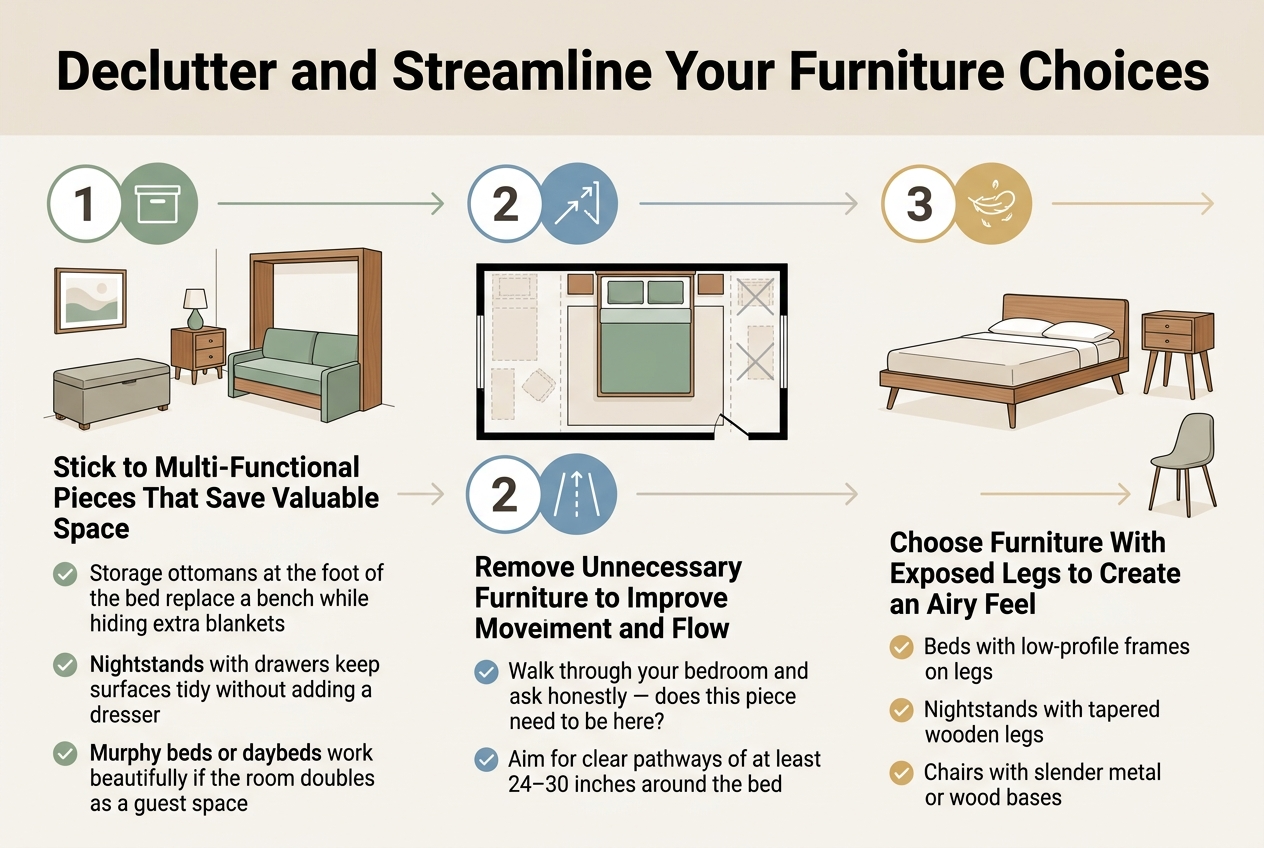
Stick to Multi-Functional Pieces That Save Valuable Space
Every piece of furniture in a small bedroom needs to earn its spot. Go for pieces that pull double duty:
- Storage ottomans at the foot of the bed replace a bench while hiding extra blankets
- Nightstands with drawers keep surfaces tidy without adding a dresser
- Murphy beds or daybeds work beautifully if the room doubles as a guest space
Remove Unnecessary Furniture to Improve Movement and Flow
Walk through your bedroom and ask honestly does this piece need to be here? A bulky armchair, an oversized dresser, or a rarely-used vanity can quietly steal floor space and make the room feel cramped.
Aim for clear pathways of at least 24–30 inches around the bed. When movement feels easy, the room automatically feels bigger.
Choose Furniture With Exposed Legs to Create an Airy Feel
This one is a game-changer. Furniture that sits directly on the floor creates visual barriers and makes a room feel heavy. Pieces with slim, raised legs let light travel underneath, which tricks the eye into reading more open floor space.
Look for:
- Beds with low-profile frames on legs
- Nightstands with tapered wooden legs
- Chairs with slender metal or wood bases
Use Strategic Decor to Trick the Eye Into Seeing More Space
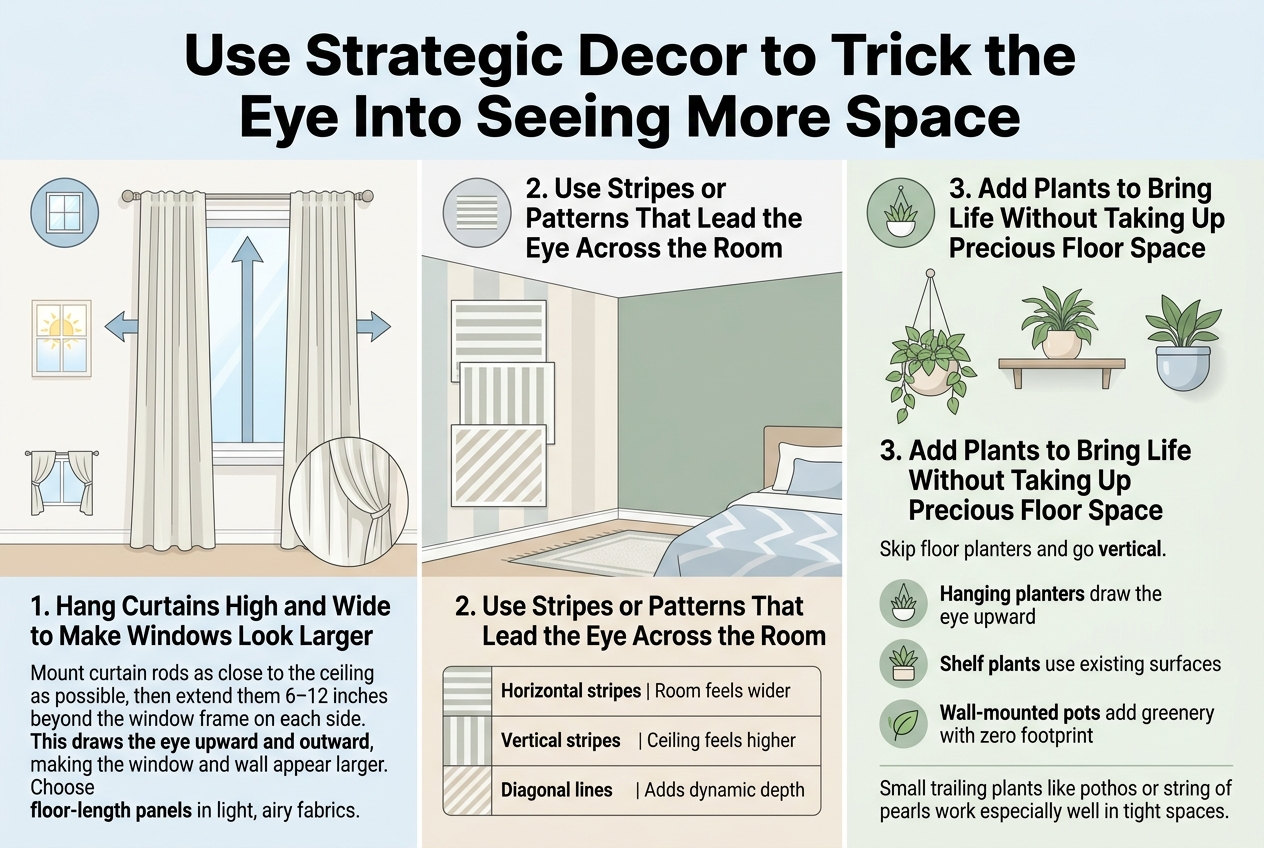
Hang Curtains High and Wide to Make Windows Look Larger
Mount curtain rods as close to the ceiling as possible, then extend them 6–12 inches beyond the window frame on each side. This simple trick draws the eye upward and outward, making both the window and the entire wall appear much larger than they actually are. Opt for floor-length panels in light, airy fabrics to keep things feeling open.
Use Stripes or Patterns That Lead the Eye Across the Room
Horizontal stripes on an accent wall, bedding, or a area rug can visually widen a narrow room. Vertical stripes do the opposite they add height. Choose whichever direction your room needs most. Keep the pattern subtle and low-contrast so it guides the eye without feeling overwhelming.
| Pattern Direction | Visual Effect |
|---|---|
| Horizontal stripes | Room feels wider |
| Vertical stripes | Ceiling feels higher |
| Diagonal lines | Adds dynamic depth |
Add Plants to Bring Life Without Taking Up Precious Floor Space
Skip floor planters and go vertical instead:
- Hanging planters draw the eye upward
- Shelf plants use existing surfaces
- Wall-mounted pots add greenery with zero footprint
Small trailing plants like pothos or string of pearls work especially well in tight spaces.
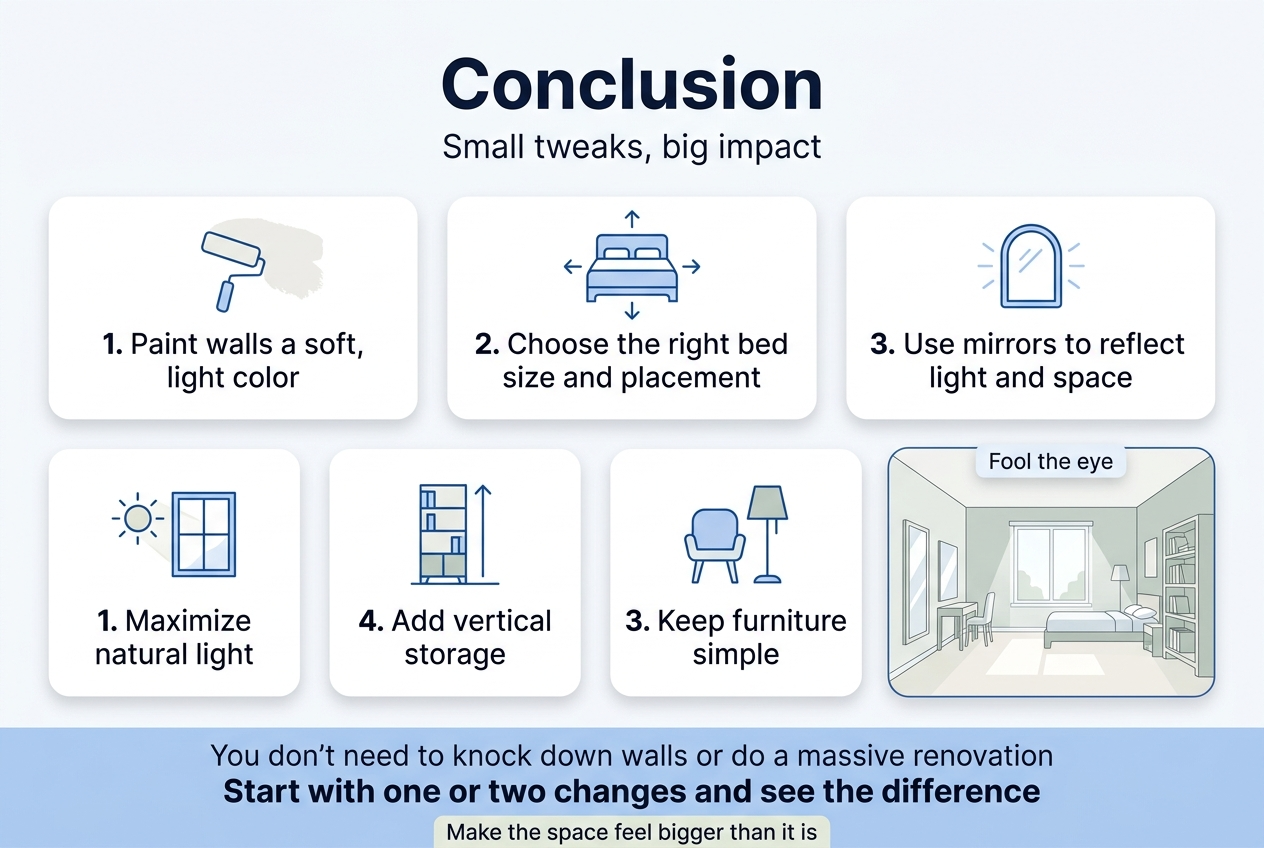
Making a small master bedroom feel open and airy is totally doable it just takes a few smart choices. From painting your walls a soft, light color to picking the right bed size and placement, every decision adds up. Mirrors, natural light, vertical storage, and simplified furniture all work together to make your space feel bigger than it actually is. And with a little thoughtful decor, you can genuinely fool the eye into thinking there’s way more room than there is.
You don’t need to knock down walls or do a massive renovation to love your bedroom again. Start with one or two changes from this list and see how much of a difference they make. Small tweaks, big impact that’s the whole idea.